Quick answer:
To clean a Blackstone griddle, turn the burners to low, scrape food and grease into the grease trap, then squirt a little water on the warm top and scrape again while it steams. Wipe it with paper towels held in tongs, let the heat dry it completely and finish with a very thin coat of oil. The whole routine takes about 5 minutes. For a deep clean, heat it up, scrape and steam it, scrub with oil and a grill stone, then re-season any dull spots.
Cleaning a Blackstone Is Easier Than You Think
Let me guess. You just made the best smash burgers of your life, and now your griddle looks like it survived a bacon tornado. Don’t worry. Cleaning a Blackstone is nothing like scrubbing a pan in the sink. No soap, no soaking and no elbow grease marathon.
The goal is simple: get the food and grease off, protect the seasoning you worked hard for, dry the steel and leave a thin coat of oil behind. Do that after every cook and your griddle will thank you with eggs that slide and zero rust surprises.
Here is my exact routine, plus what to do when things get sticky. Literally.
What You Need to Clean a Blackstone Griddle
Nothing fancy here. Keep these within arm’s reach of the griddle and cleanup takes about five minutes:
- Griddle scraper: the MVP of cleanup. Its flat, sharp edge pushes food bits and grease into the trap in a few passes, and it works best while the griddle is still warm.
- Grease cup liners: foil liners that sit inside the grease cup. When it fills up, you toss the liner and the cup stays clean. No more scrubbing week-old grease.
- Squeeze bottle of water: for the steam trick. A quick squirt on the warm cooktop loosens stuck-on bits so they practically slide off.
- Paper towels or lint-free cotton towels: for wiping down the cooktop and spreading oil. Lint-free matters, because fluffy towels leave little fibers stuck in your seasoning.
- High smoke point oil: avocado, canola or vegetable oil all work. A thin coat after every clean is what keeps rust away and your seasoning slick.
- Cleaning kit: an 11-in-1 kit made for Blackstone griddles, if you’d rather grab everything in one box.
Need help picking the right tools? Check out my 7 Must-Have Blackstone Griddle Accessories post. I walk you through what’s worth buying first and what can wait.
How to Clean a Blackstone Griddle After Cooking (5 Steps)
Do this while the griddle is still warm. Warm grease wipes right off. Cold grease turns into griddle cement.
Step 1: Turn the Heat Down to Low
Right after you take the food off, drop the burners to low. You want the top warm, not screaming hot, so the water steams gently instead of turning your patio into a sauna.
Step 2: Scrape Everything Into the Grease Trap
Hold your scraper at a low angle and push leftover bits and grease toward the grease trap in long, smooth passes. You are clearing debris, not sanding off the seasoning, so firm but gentle wins. Burnt cheese and sugary sauces usually need a second pass.
Step 3: Steam Off the Stuck Bits
Squirt a little water onto the stubborn spots and let it sizzle. The steam lifts stuck food so your scraper can push it right off. A few squirts is plenty. You are deglazing, not filling a kiddie pool.
Step 4: Wipe It Down and Dry It
Grab a wad of paper towels with tongs and wipe the whole top until it looks smooth and dark. Then leave the burners on low for a minute or two so every drop of water cooks off. This little step is what keeps rust away.
Step 5: Oil It, Cool It, Cover It
Squirt on a little oil, spread it into a thin, almost dry coat and let it heat for a minute. Thin is the magic word. Puddles of oil turn sticky by next weekend. Then turn the burners off, let the griddle cool completely and cover it.
That’s it. Five minutes, tops. Probably less time than it took to argue about who gets the crispy edges.
A Simple Way to Keep Your Griddle Clean
Here’s the step most people skip. A griddle that sits uncovered doesn’t stay clean for long. Pollen, dust and the odd bug land on that fresh coat of oil and stick to it, and the morning dew settles right on the steel. By the next cook, you’re scraping and re-oiling before you’ve cracked a single egg.
The fix is to cover the cooktop itself, not just the griddle. This is the silicone griddle mat I lay on mine once it has cooled:
Why Does My Paper Towel Still Turn Black?
This is the question I get asked more than any other, so let’s clear it up. A little black on your paper towel is completely normal. It is tiny bits of carbonized oil and seasoning, not dirt and not rust. You could wipe until next Tuesday and it would still come up a little gray.
My rule: when the towel comes up light gray instead of greasy black, you’re done. If you see flakes or chunks, that is buildup, and the deep clean below takes care of it. And if the towel comes up orange, that’s rust. Head over to my guide on how to get rust off a Blackstone griddle.
How to Deep Clean a Blackstone Griddle
The 5-minute routine handles everyday messes, but every 6 to 8 weeks of regular cooking your griddle deserves a proper reset. Think of it as a spa day for your Blackstone, minus the cucumber slices. Plan on about 30 to 45 minutes.
Signs Your Griddle Needs a Deep Clean
- The surface feels sticky or tacky, even when it’s warm.
- Black flakes keep ending up in your eggs or pancakes.
- Food sticks in spots where it used to slide right off.
- You see dull, patchy or crusty areas, or burnt-on sauce your scraper can’t budge.
- It’s the start or end of the season, or the griddle sat unused for a while.
Seeing orange spots instead of black? That is rust, not buildup. Start with my guide on how to get rust off a Blackstone griddle, then come back for the finishing touches.
What You Need for a Deep Clean
The same scraper, squeeze bottle, paper towels and oil from the everyday list, plus a grill stone or scouring pads. The Blackstone cleaning kit covers most of it in one box, with cleaning bricks, scouring pads and handles for both.
Step 1: Heat It Up
Run the burners on medium-high for 10 to 15 minutes. Heat softens sticky oil and loosens carbon, so the rest of the job goes a lot faster.
Step 2: Scrape Off the Loose Gunk
Turn the heat down to medium and scrape the whole top with firm, low-angle passes, pushing everything into the grease trap. Flakes that come off easily were already on their way out.
Step 3: Steam the Stubborn Spots
Squirt water on the worst areas and scrape again while it sizzles. For burnt-on sauce, let the water bubble for a few seconds before you scrape. Repeat until the scraper glides instead of catching.
Step 4: Scrub With Oil and a Grill Stone
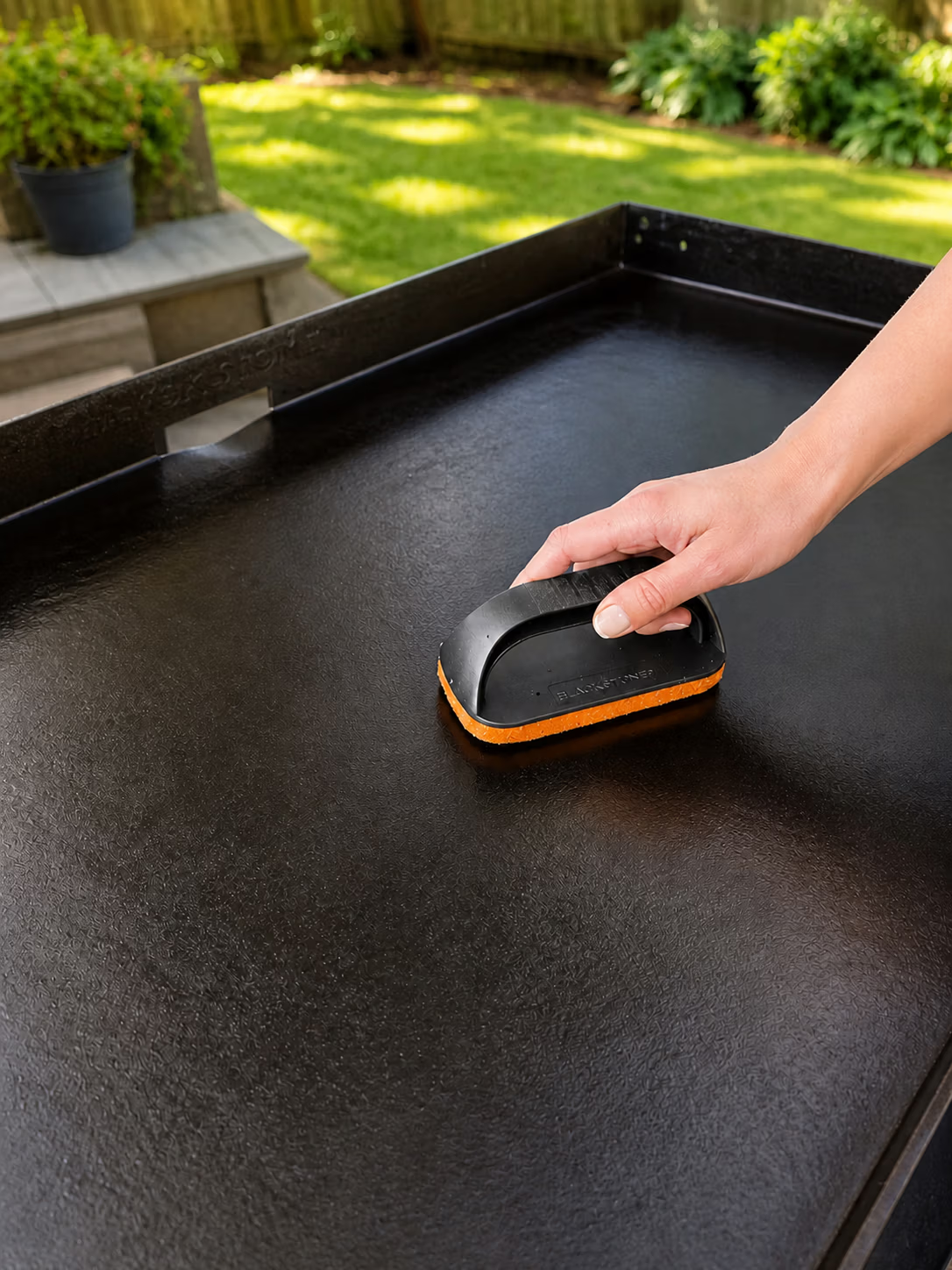
Turn the burners off. Add a couple tablespoons of oil and scrub in small circles with a grill stone or scouring pad until the surface feels smooth under your scraper. Never scrub it dry. The oil keeps the dust down and protects the steel while you work.
Careful with your fingers here. Even with the burners off, the steel stays hot for a good while, and holding a bare grill stone puts your fingertips right next to it. The Blackstone cleaning kit comes with cleaning bricks and a handle for them, so you get a much better grip and keep your knuckles away from the heat.
Step 5: Wipe and Dry
Wipe with paper towels until they come up light gray, then put the burners back on low for a few minutes so every bit of moisture cooks off.
Step 6: Re-Season the Dull Spots
If you see gray or bare patches, give the top 2 or 3 very thin coats of oil and let each one smoke off. Scrubbed all the way down to bare metal? Follow my full guide on how to season a Blackstone griddle.
How to Get Rid of Sticky Residue
A sticky griddle is almost always oil that never finished bonding, usually from a coat that went on too thick. Heat the griddle on high for 15 to 20 minutes to finish curing it, then scrape. Still tacky? Scrub with a little oil and a grill stone, wipe it thin and heat it again. Lesson learned: thin coats, always.
How to Remove Black Flakes and Carbon Buildup
Black flakes are usually carbon from burnt food, or seasoning layers that didn’t bond and are starting to peel. They’re a nuisance, not a reason to panic. Scrape off everything that lifts, scrub the edges of the flaky spots smooth with a grill stone, then build those areas back up with thin coats of oil. If you leave them, they keep turning up in your food. Not sure what’s causing yours? Here’s my full guide on why your Blackstone is flaking.
How to Clean a Blackstone Before the First Use
A brand-new griddle comes with a thin factory coating and maybe a little warehouse dust. Wash the cooktop once with warm, soapy water, rinse it well and dry it completely with heat. This is the one time soap is welcome at the party. After that, your next stop is seasoning.
Don't Forget the Grease Trap and the Outside
The grease trap is the part everyone forgets until it smells like a fast-food dumpster in July. Empty it every few cooks and line it with disposable foil grease cup liners, so cleanup takes 10 seconds.
The outside of the griddle, the side shelves and the hood are a different story than the cooktop. Those painted parts can get a wipe with warm, soapy water and a soft cloth. Just keep the soap off the cooking surface.
Can You Use Soap, Water or a Pressure Washer?
- Soap: only for the very first clean, or right before you re-season after removing rust. Regular soap washes strip the oil layer you have been building.
- Water: yes, in small amounts on a warm griddle. That’s the steam trick from step 3. Never pour cold water on a ripping hot top, and never leave water sitting on it.
- Pressure washer: please don’t. It blasts off the seasoning and soaks the burners. Your griddle is not a muddy truck.
Common Blackstone Cleaning Mistakes
- Waiting until tomorrow. Cold, hardened grease takes twice the work.
- Drowning it in oil. A thick coat goes gummy. Thin and almost dry is the goal.
- Scraping like you’re mad at it. Firm, low-angle passes. The seasoning is on your team.
- Covering it while it’s hot. Let it cool first, or you trap steam right on the steel.
- Skipping the dry. Water left on the top is how rust gets its foot in the door.
Keeping It Clean Between Cooks
Cleaning after you cook is most of the battle. The other half is what happens while your griddle sits and waits. A hard lid or weather cover keeps the rain off, but cool nights still bring condensation, and it settles right on the steel. Dust and pollen sneak in around the edges, stick to the oil, and before you know it you’re looking at a tacky film or a few orange rust spots.
A silicone mat stops that at the source. It lies flat on the cooled cooktop, so moisture, dust and bugs land on the mat instead of on your seasoning. When I come back, I lift it off, preheat and start cooking. No scraping first, no surprises.
If you only add one thing to your routine, I recommend trying a silicone griddle mat. It’s the easiest way I know to keep all that cleaning from going to waste.
Blackstone Cleaning FAQ
Can I clean my Blackstone with just water?
Yes. On a warm griddle, water and a scraper handle almost every cleanup. Just dry it with heat and wipe on a thin coat of oil afterward.
Should I clean my griddle hot or cold?
Warm. Hot enough to soften the grease, cool enough that water steams gently instead of spitting. Right after cooking, with the burners on low, is the sweet spot.
What are the black flakes on my griddle?
Usually carbon buildup, or a thick layer of seasoning that didn’t bond and is starting to peel. Scrape the loose flakes off, do a deep clean and build the surface back up with thin coats of oil.
What’s the best oil to use after cleaning?
Any neutral, high smoke point oil works, like avocado, canola, vegetable or grapeseed. Use just enough for a thin sheen.
How do I clean a Blackstone after cooking bacon?
Scrape the grease into the trap while it’s warm, then do the normal steam, wipe and oil routine. Bacon fat is actually good for your seasoning, so you don’t need to chase every last drop.
Do I need to clean the griddle before I cook?
Just a quick wipe and a few minutes of heat to burn off dust and old oil. If it has been sitting for a while, check for rust spots first.
How long does a deep clean take?
About 30 to 45 minutes, including a couple of fresh coats of seasoning at the end.
Can I use steel wool to deep clean my griddle?
You can, but it strips the seasoning along with the gunk, so plan on re-seasoning the whole top afterward. A grill stone with a little oil is gentler and usually does the job.