This post may contain affiliate links. Please read our Disclosure Policy
How To Clean a Blackstone and Maintain the Seasoning
A Blackstone griddle is one of the best backyard cooking tools you can own, but it does need the right kind of care. The good news is that cleaning a Blackstone is not complicated once you understand the basic routine.
You do not need harsh chemicals. You do not need to scrub it like a dirty kitchen pan. And you definitely do not want to remove the seasoning every time you cook.
The goal is simple: remove food debris, protect the seasoning, dry the surface, and leave behind a thin layer of oil so the griddle is ready for the next cook.
In this guide, I’ll walk you through exactly how to clean a Blackstone griddle after cooking, how to do a deeper clean when it gets sticky, and how to keep rust from showing up.
What You Need to Clean a Blackstone Griddle
Before you start, keep a few basic tools nearby:
- Griddle scraper
- Paper towels
- Squeeze bottle (optional)
- High smoke point oil or griddle seasoning oil
- Grill stone
For everyday cleaning, you usually only need a scraper, water, paper towels, and oil.
The Best Time to Clean Your Blackstone
The best time to clean your Blackstone griddle is right after cooking while the surface is still warm.
A warm griddle makes cleanup much easier because stuck-on food, grease, and sauces lift off faster. If you let everything cool and harden, you will usually need more scraping and more water to loosen the mess.
You do not need the griddle screaming hot. Warm to medium heat is usually enough.
How to Clean a Blackstone Griddle After Cooking
Step 1: Turn the Heat Down
After you finish cooking, turn the burners down to low or medium-low.
You want the griddle warm enough to loosen food and grease, but not so hot that water instantly flashes into steam or burns your hands while cleaning.
Let the surface settle for a minute if it is extremely hot.
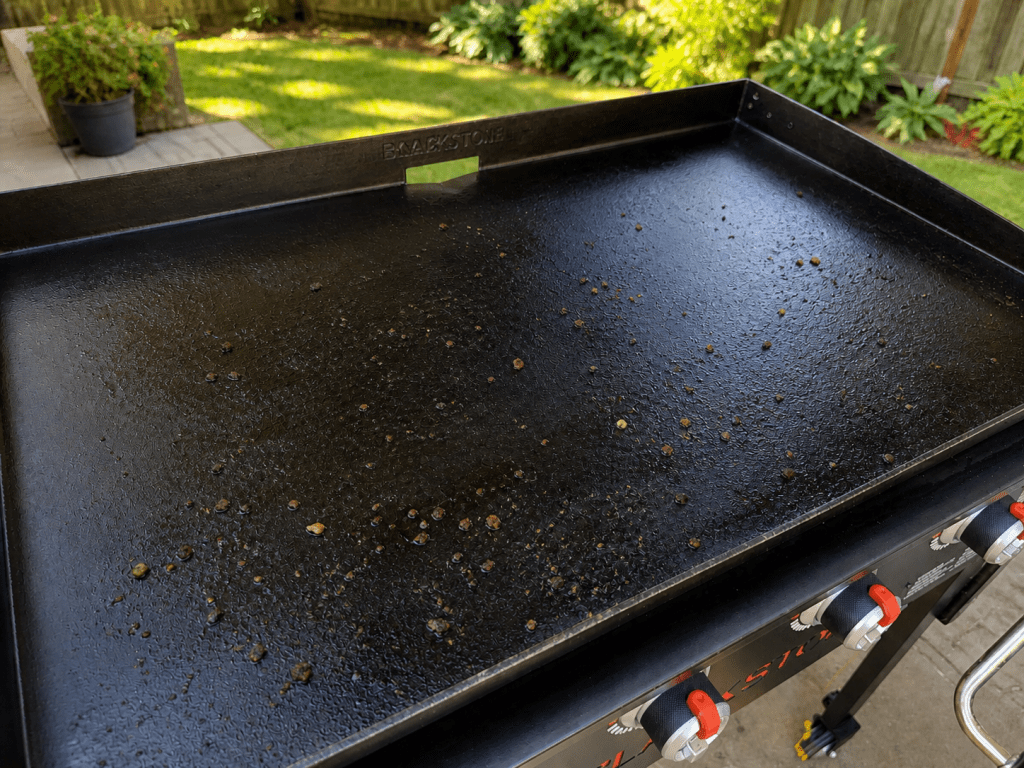
Step 2: Scrape Food and Grease Toward the Grease Trap
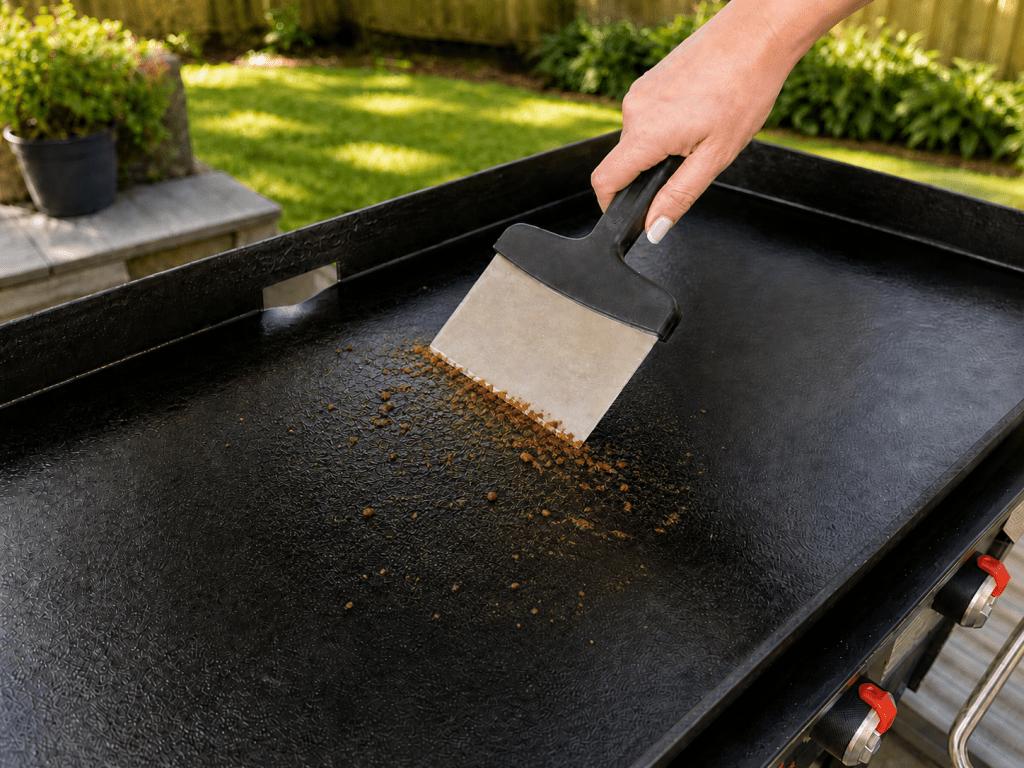
Use a griddle scraper or metal spatula to push leftover food, grease, and small bits toward the rear grease trap.
Hold the scraper at a low angle and work across the surface in smooth passes. Do not dig aggressively into the griddle top. You are trying to remove debris, not scrape off the seasoning layer.
Pay extra attention to:
- Burnt cheese
- Sugary sauces
- Marinades
- Bacon grease
- Burger residue
- Fried rice bits
- Sticky onions
These are the things that usually make the griddle feel dirty or uneven after cooking.
Step 3: Add a Small Amount of Water
Once the loose food and grease are scraped away, add a small amount of water to the warm griddle surface.
A squeeze bottle works best because you can control where the water goes.
The water helps loosen stuck-on food and creates steam, making it easier to clean without using soap. You do not need to flood the griddle. Start with a small amount and add more only if needed.
Use your scraper again to gently lift the loosened bits and push everything toward the grease trap.
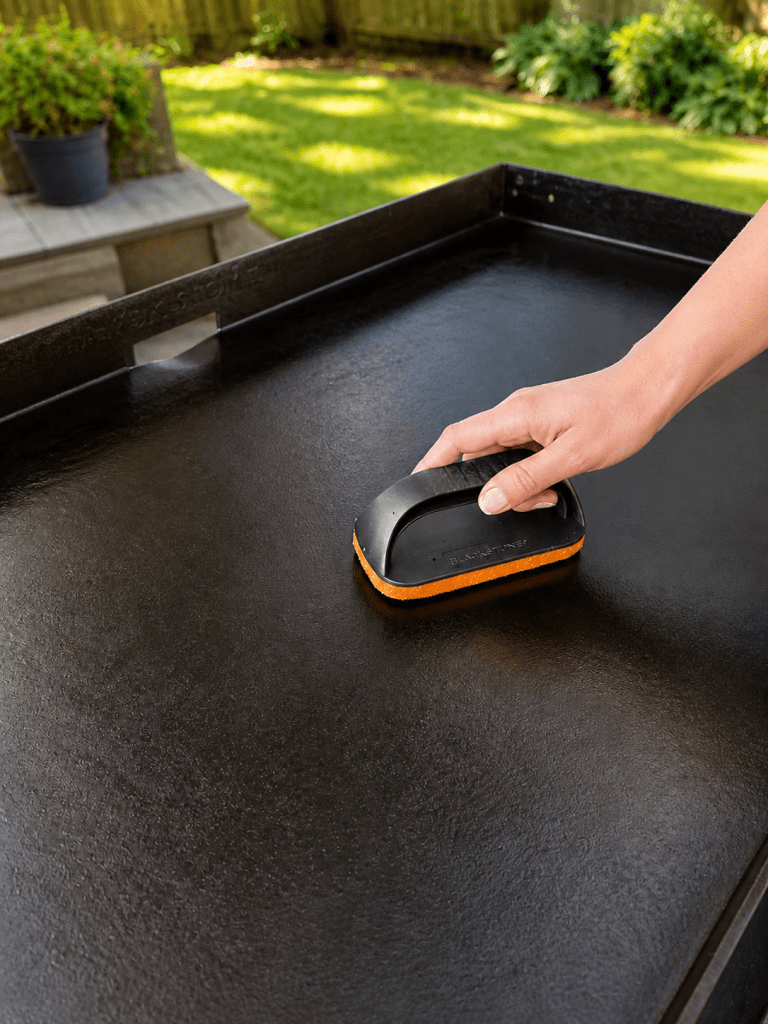
Step 4: Wipe the Surface Clean
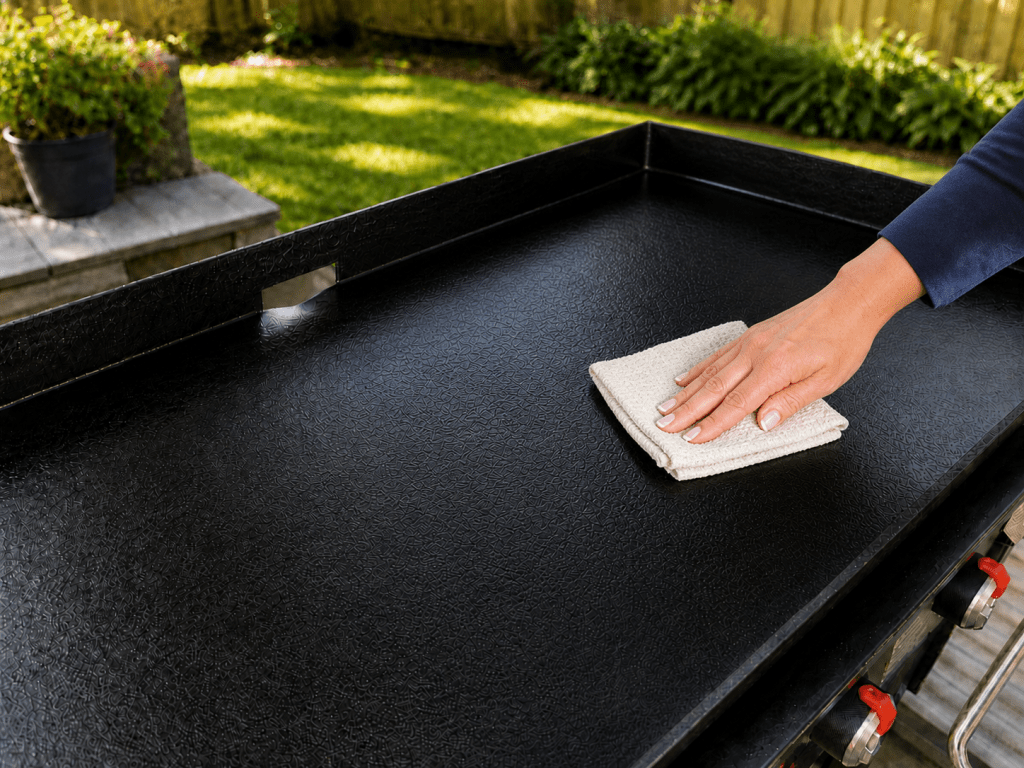
After scraping, wipe the griddle surface with paper towels or a clean cloth.
Be careful, because the surface will still be hot.
You may need to wipe it more than once, especially if you cooked greasy foods like bacon, smash burgers, or cheesesteaks.
At this point, the surface should look smooth, dark, and mostly free of food debris.
Step 5: Dry the Griddle Completely
Moisture is one of the biggest enemies of a Blackstone griddle.
After wiping the surface, keep the burners on low for a short time to help evaporate any remaining water. You want the cooking surface completely dry before adding oil.
This step is easy to skip, but it matters. Even a little trapped moisture can lead to rust over time, especially if your griddle lives outside.
Step 6: Apply a Thin Layer of Oil
Once the griddle is clean and dry, add a very thin layer of oil to the cooking surface.
Use a paper towel or cloth to spread the oil evenly across the entire top.
The key word is thin. You do not want puddles of oil sitting on the griddle. Too much oil can become sticky, gummy, or uneven the next time you cook.
A light coat helps protect the seasoning and creates a barrier against moisture.
Good oils for Blackstone griddle care include:
- Avocado oil
- Canola oil
- Vegetable oil
- Grapeseed oil
- Flaxseed oil, though it can be more finicky
For everyday cleaning, any neutral high smoke point oil works well.
Step 7: Let It Cool and Cover It
After oiling, turn the burners off and let the griddle cool completely before putting anything on top of it.
Once it’s cooled down, covering it is one of the simplest things you can do to extend its life. Dust, moisture, pollen, and outdoor debris all work against a well-seasoned surface, and a good cover keeps all of that out.
A hard or soft cover handles the bulk of the protection, but the cooking surface itself is where seasoning tends to break down first. That flat top is constantly exposed to whatever the weather throws at it, and even a little trapped moisture can quietly undo a lot of good maintenance.
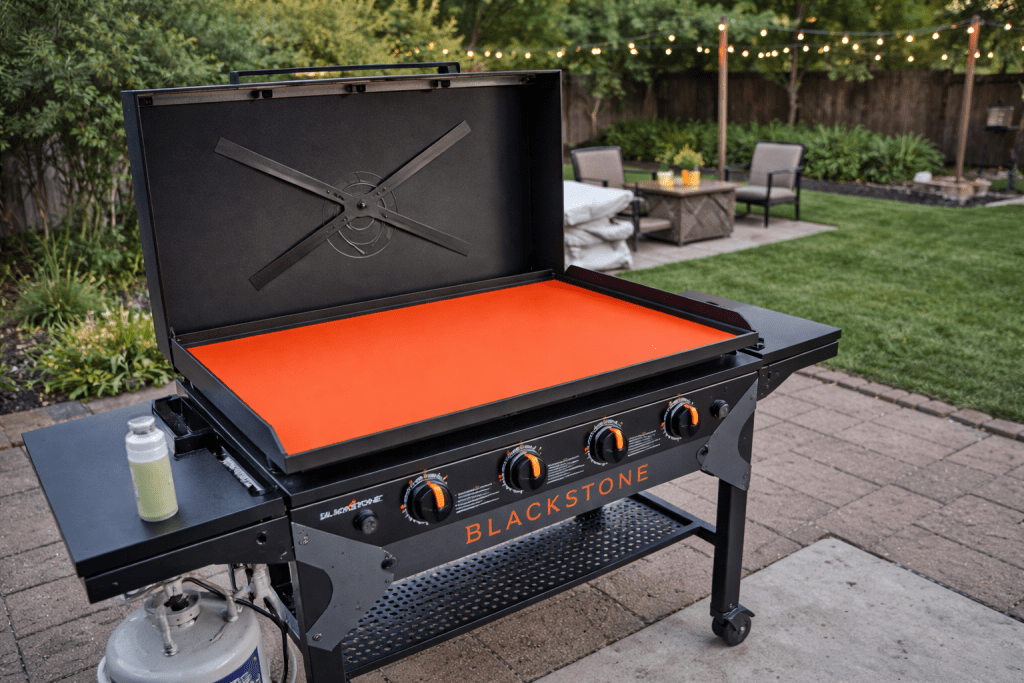
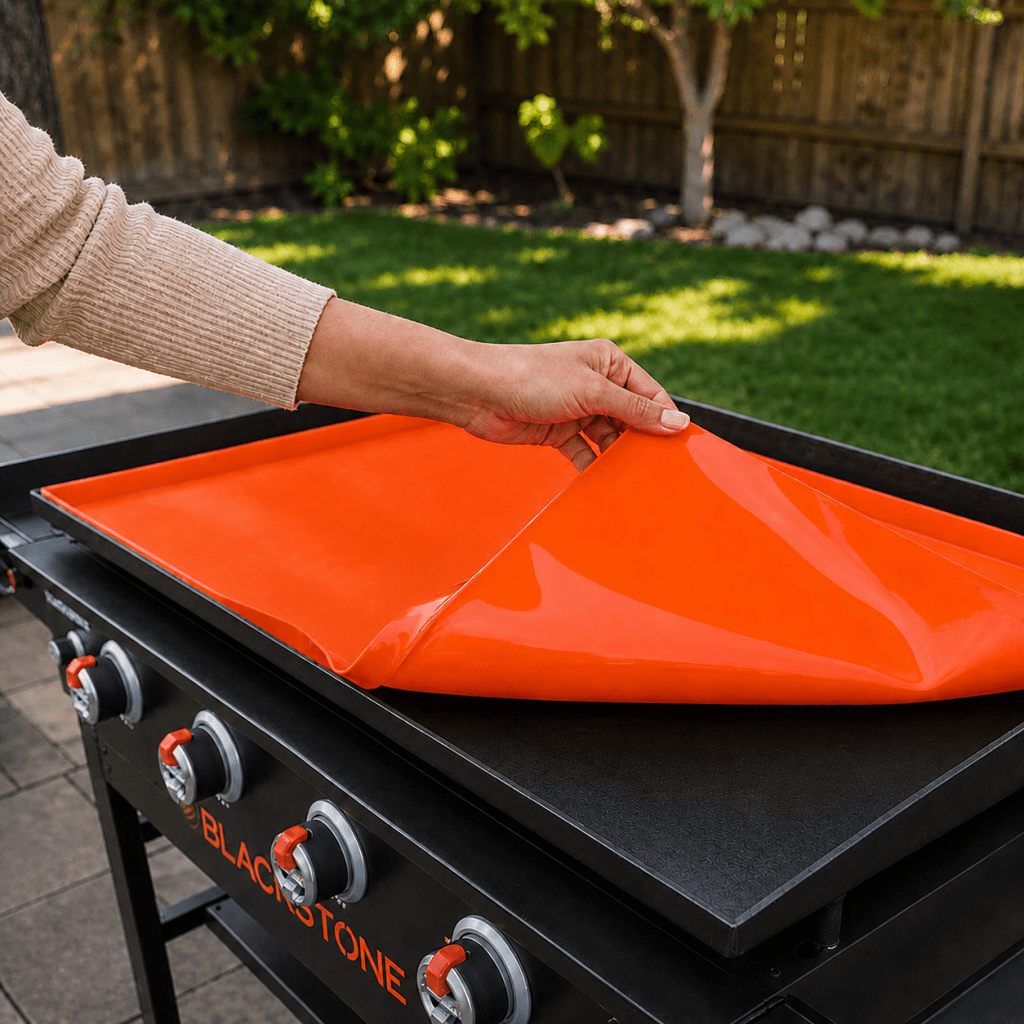
That is where the silicone griddle cover earns its place. Rather than replacing your regular cover, it sits directly on the cooking surface and creates a thin, snug barrier right where rust and seasoning issues tend to start.
A silicone cover takes all the worry out of storage. It fits perfectly over the cooking surface, keeps moisture and debris off your seasoning, and means every cook starts exactly the way you want it to — clean, protected, and ready to go.
How to Clean a Blackstone Before First Use
Before you cook on a brand-new Blackstone griddle, you should clean the surface first. New griddles can have dust, factory residue, or protective oil on the cooktop, so it is important to wash that off before seasoning.
Start by wiping the griddle surface with warm, soapy water and a clean cloth or paper towels. Scrub lightly if needed, but you do not need to be aggressive. Once the surface is clean, rinse it well with clean water to remove any soap residue.
After rinsing, dry the griddle completely with paper towels or a clean towel. Then turn the burners on low for a few minutes to evaporate any remaining moisture.
At this point, your griddle is clean and ready to season. For the full next step, follow my guide on How To Season a Blackstone Griddle.
How to Clean a Rusty Blackstone Griddle
If your Blackstone griddle has rust on it, do not panic. Most surface rust can be removed, but it needs a more focused cleaning process than a normal after-cook wipe-down.
For rust, you will usually need to heat the griddle, scrape the surface, scrub the rusty areas, wipe everything clean, dry it completely, and then reseason the cooktop so it is protected again.
I walk through the full process in detail here: How to Get Rust Off a Blackstone Griddle.
Once the rust is removed, the most important thing is prevention. Always dry the griddle fully after cleaning, add a thin layer of oil, and keep it covered when not in use.
Common Blackstone Cleaning Mistakes
Using Too Much Oil
A thick layer of oil does not protect the griddle better. It can turn sticky and uneven.
Use a thin coat and wipe off the excess.
Leaving Water on the Surface
Water causes rust. After cleaning with water, always dry the griddle with heat before storing it.
Scraping Too Aggressively
You want to remove food debris, not destroy the seasoning layer. Use firm but controlled pressure.
Forgetting the Grease Trap
Empty and clean the grease trap regularly. Old grease attracts bugs, smells bad, and can make your griddle area messy.
Leaving the Griddle Uncovered
Outdoor moisture, humidity, pollen, and debris can all affect the surface. Covering the griddle is one of the easiest ways to keep it cleaner between cooks.
How Often Should You Clean a Blackstone Griddle?
You should clean your Blackstone after every cook.
That does not mean deep cleaning every time. A normal after-cook cleaning usually takes only a few minutes.
A good routine is:
- Scrape after every cook
- Wipe after every cook
- Dry after every cook
- Oil lightly after every cook
- Deep clean only when needed
- Reseason when the surface looks dry, patchy, rusty, or sticky
The better your small routine is, the less often you will need a serious deep clean.
After I’m done cooking, I don’t try to make the griddle look brand new. I just want it clean, dry, lightly oiled, and ready for the next cook.
While the surface is still warm, I scrape the leftover food and grease back into the grease trap. If anything is stuck on, I add a small splash of water and let the steam help loosen it up. Then I scrape it again, wipe the surface clean, and leave the heat on for a minute or two so any remaining moisture can dry off completely.
Once the griddle is dry, I add a very thin layer of oil and spread it across the cooking surface. You don’t need much. Too much oil can actually leave the surface sticky, so I like to keep it light.
After that, I let the griddle cool and cover it. If your griddle lives outside like mine often does, this is where a silicone griddle cover can be a nice extra step to keep it spotless. It sits directly on the cooking surface and helps keep dust, moisture, pollen, bugs, and outdoor mess away from the cooktop between cooks.
My Simple Trick for Keeping the Griddle Clean Between Cooks
Cleaning your Blackstone after cooking is the most important step, but what happens between cooks matters too.
Once the griddle is clean, dry, and lightly oiled, you want to keep moisture, dust, pollen, bugs, and outdoor debris off the cooking surface. That is especially important if your griddle lives outside or sits under a lid where condensation can still build up.
A good cover helps protect the whole griddle, but I also like using a fitted silicone griddle mat directly on the cooktop. It creates a simple barrier over the cooking surface, which helps keep the seasoning cleaner and makes the next cook easier.
You can absolutely maintain your griddle with proper cleaning, drying, and oiling. But if you want one small extra step after cleaning, a silicone mat is an easy way to help protect the surface between cooks.
Here is the silicone cover I recommend: