How to Clean a Blackstone Griddle (Without Ruining the Seasoning)
A Blackstone griddle is one of those cooking tools that gets better the more you use it.
But there’s one thing every new griddle owner wonders the first few times they cook on it:
How do you actually clean it?
Unlike a regular pan, a griddle doesn’t get washed with soap after every use. In fact, using soap too often can actually damage the seasoning you worked hard to build.
The good news is that cleaning a Blackstone griddle is surprisingly simple.
Once you understand the process, it takes less than two minutes after cooking, and your griddle will stay smooth, nonstick, and ready for the next cook.
Let’s walk through exactly how to clean it the right way.
Why Cleaning a Griddle Is Different
A Blackstone griddle is made from cold rolled steel, which behaves differently than stainless steel pans or nonstick cookware.
Instead of relying on coatings, a griddle develops a natural nonstick surface called seasoning.
Seasoning happens when oil is heated past its smoke point and bonds to the steel through a process called polymerization. Over time, this creates the dark, smooth surface you see on well-used griddles.
That layer does three important things:
• prevents food from sticking
• protects the steel from rust
• improves cooking performance
Because of this, cleaning a griddle is more about protecting the seasoning than scrubbing it away.
Think of it more like caring for cast iron cookware than washing dishes.
When Should You Clean Your Griddle?
The best time to clean a Blackstone griddle is right after cooking, while the surface is still warm.
Warm steel releases food residue much more easily than cold steel.
Waiting until the griddle cools down usually means you’ll have to reheat it later just to loosen the stuck bits.
A quick clean immediately after cooking keeps the surface smooth and prevents buildup.
Should You Use Soap?
This is one of the most common questions people ask.
The short answer:
Soap is okay occasionally — but not every time.
For a brand new griddle, you should wash it once with mild soap and water to remove factory residue.
After that, soap is rarely necessary.
Frequent soap washing can slowly strip away the seasoning layer.
Instead, most cleanup should be done with:
• scraping
• water
• wiping
• light oil
This method keeps the seasoning intact while still keeping the griddle clean.
What If Food Is Really Stuck?
Sometimes a cook leaves behind stubborn residue.
This happens with sugary marinades, sauces, or burnt bits.
When that happens, try this method:
-
Heat the griddle back up.
-
Add a small amount of water.
-
Scrape gently with a griddle scraper.
The heat and steam will loosen the residue quickly.
Avoid aggressive scrubbing with steel wool, since that can remove seasoning.
Griddle Seasoning Oil: What to Use
The type of oil you use for seasoning matters more than most people think. The goal is to choose an oil that can handle high heat and create a strong seasoning layer on the steel.
Oils with a high smoke point work best because they bond to the griddle surface more effectively during the seasoning process.
Some of the best oils for seasoning a Blackstone griddle include:
• Avocado oil – one of the highest smoke points and great for building a durable layer.
• Canola oil – affordable, neutral flavor, and commonly used for griddle seasoning.
• Vegetable oil – widely available and works well for beginners.
• Flaxseed oil – sometimes used for seasoning because it polymerizes well, though it can be more expensive.
Avoid oils with very low smoke points like butter or olive oil for the initial seasoning process. They tend to burn too quickly and don’t build the same durable coating.
The most important rule is to apply very thin layers of oil. Thick oil layers can become sticky instead of forming a smooth seasoning.
With a few thin coats and proper heat, your griddle will develop that deep black surface that makes cooking easier and better every time.
How to Prevent Rust
Rust is the biggest enemy of any steel griddle.
The good news is that rust is almost always preventable.
Most rust forms when moisture sits on the griddle surface for long periods of time.
Common causes include:
• humidity
• rain
• condensation under the lid
• storing the griddle without oil
A simple habit prevents almost all rust problems:
Always leave a thin coat of oil on the griddle after cleaning.
That oil layer protects the steel from oxygen and moisture.
A Simple Way to Protect Your Seasoning
Even with oil, outdoor griddles are exposed to air, humidity, and changing temperatures.
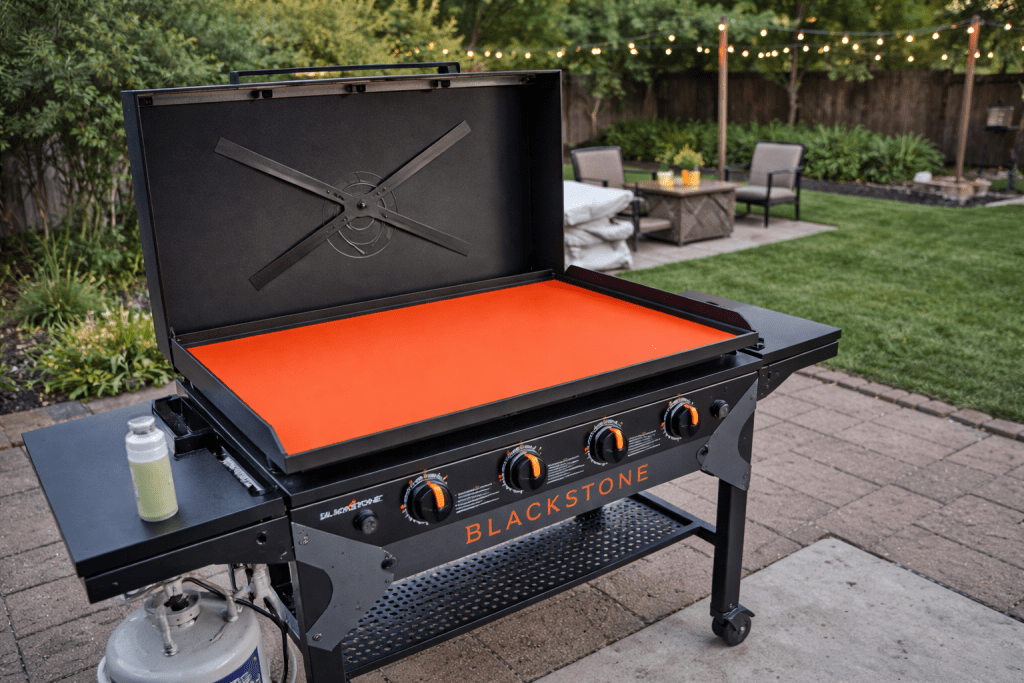
One easy trick many griddle cooks use is placing a silicone griddle mat directly on the cooking surface.
The mat creates a barrier between the seasoning and the air inside the closed lid.
This helps:
• reduce condensation
• prevent rust between cooks
• keep dust and debris off the surface
• preserve the seasoning longer
If you cook outside often, it’s a simple way to protect the work you put into seasoning your griddle.
Tools That Make Cleaning Easier
You don’t need many tools to clean a griddle, but a few things make the job much easier.
Griddle scraper
Helps remove food residue quickly after cooking.
Sturdy metal spatula
Great for scraping and pushing debris toward the grease trap.
Oil squeeze bottle
Makes it easy to apply a thin coat of oil after cleaning.
Paper towels or cloths
Used for wiping the surface clean.
These tools make cleanup quick so you can spend more time cooking and less time scrubbing.
Fun Griddle Fact
Flat-top cooking surfaces have been used for over 100 years in diners across the United States.
Short-order cooks loved them because they could cook multiple foods at once: burgers, eggs, pancakes, and sandwiches all on the same surface.
That same design is what makes modern griddles like the Blackstone so versatile today.
You’re basically cooking on a restaurant-style flat top in your backyard.
Common Griddle Cleaning Mistakes
Here are a few things to avoid:
Using too much soap
This can slowly strip the seasoning.
Leaving the griddle wet
Moisture leads to rust.
Scrubbing aggressively
Harsh scrubbing can damage the seasoning layer.
Skipping the oil step
A quick oil coat protects the steel.
Avoid these mistakes and your griddle will stay in great shape.


 You can see the silicone mat I personally recommend here.